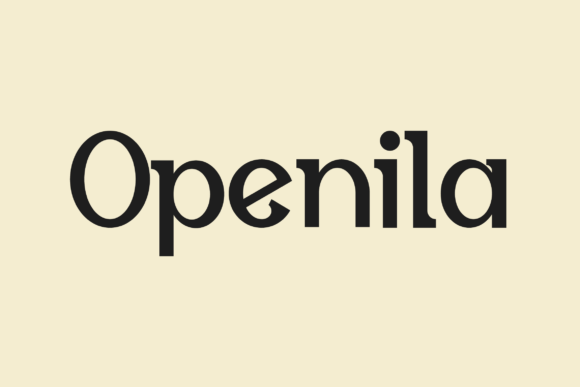
Openila: A Font for Creative Makers
There’s something about the way Openila sits on a candle label that just feels right. I was working on a batch of soy candles, trying to find the perfect font for the labels, when I came across this sleek sans serif typeface. It wasn’t just the clean lines or the open counters that caught my eye—it was how it made everything look more intentional, more thoughtful.
Openila is a minimalist and humanist sans serif font with a warm, approachable feel. Its balanced proportions and subtle curves give it a modern yet friendly vibe. Whether I’m designing a greeting card or printing a sticker sheet, Openila brings a sense of clarity and elegance without being too formal.
One of the first projects I used Openila for was a set of seasonal greeting cards. I wanted something that felt fresh but still had character. The font worked perfectly on the front of the cards, paired with a simple script for the message inside. It added just the right amount of sophistication without overwhelming the design.
I also love using Openila for printable wall art. When I create digital templates for customers to print at home, the font’s readability is key. Openila holds up well in both large and small sizes, making it ideal for headers, quotes, and decorative text. I’ve used it for farmhouse signs, wedding welcome boards, and even custom planner pages.
For handmade labels, Openila is a game-changer. I’ve used it on product tags, boutique packaging, and even on mugs and tote bags. Its clean lines make it easy to read from a distance, which is important when customers are browsing a shop. Plus, it pairs beautifully with other fonts—like a soft script or a bold display type—without clashing.
When I’m preparing mockups for my online store, I always test Openila on different backgrounds and sizes. It looks great on white paper, but it also works well on colored cards or printed merchandise. I’ve found that it maintains its legibility even when cut with a Cricut or Silhouette machine, which is a big plus for anyone who uses vinyl or heat transfer materials.
One thing I’ve noticed about Openila is how it helps reinforce brand consistency. I use it across all my shop materials—from product listings to social media graphics. It gives my work a cohesive look that customers recognize. Whether it’s a birthday invitation, a holiday tag, or a digital printable, Openila adds a touch of professionalism without feeling stiff.
Openila is versatile enough to handle short phrases, names, and titles, but it also works well for longer text. I’ve used it in small print on product packaging and in larger sizes for signage. It’s especially good for editorial designs where clarity and visual appeal are both important.
When I’m designing a new product, I often start by sketching out ideas and then testing different fonts. Openila has become my go-to for many of these early stages. It’s not just about looking good—it’s about feeling right. The font has a quiet confidence that matches the kind of handmade products I create.
I’ve also used Openila for wedding stationery, including invitations and welcome signs. It adds a subtle elegance that complements more ornate details. For digital downloads, like printable planners or calendars, the font’s clean structure makes it easy to read and customize.
One thing I always remind myself is to check the font’s styles, alternates, and ligatures before finalizing a design. Openila offers a range of weights and variations that can be used to add depth and interest to a layout. I’ve found that using different weights for headings and body text creates a nice visual hierarchy without complicating the design.
For those who are new to typography, Openila is a great starting point. It’s a premium font that doesn’t require a lot of tweaking to look good. Whether you’re creating a single label or an entire branding package, it’s a reliable choice that can elevate your work.
If you’re a crafter, a printable creator, or a small business owner, Openila is worth considering for your next project. It’s a font that feels like it was made for real-world use—whether you’re printing stickers, designing packaging, or crafting a digital template. Its balance of style and functionality makes it a valuable addition to any creative toolkit.
From candle labels to wedding invitations, Openila has proven itself as a font that can adapt to a wide range of handmade products. It’s not just a typeface—it’s a tool that helps bring creative ideas to life with clarity, charm, and a touch of modernity.