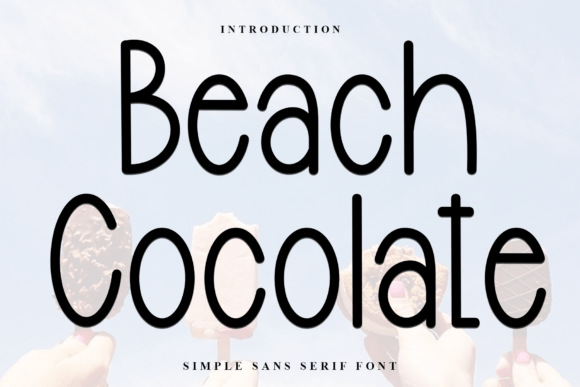
Beach Cocolate: A Handwritten Script for Real Projects
As a designer with years of experience in branding, editorial design, and digital product creation, I’ve seen countless fonts come and go. Beach Cocolate stands out as a unique script handwritten font that brings personality and warmth to any project. Its casual, organic feel makes it ideal for creative brands looking to convey authenticity without sacrificing style.
The First Impression: Warmth and Personality
When I first encountered Beach Cocolate, its handwritten aesthetic immediately caught my attention. The letters have a natural flow, as if they were written by hand rather than generated by a computer. This gives the typeface a friendly, approachable mood—perfect for brands aiming to connect with their audience on a personal level.
The strokes vary slightly, which adds character but also means it’s not the best choice for high-contrast or formal designs. It works best when used in contexts where a human touch is desired, such as invitations, packaging, or social media graphics.
Real-World Applications: Where Beach Cocolate Shines
In logo design, Beach Cocolate can be a strong choice for small businesses, artisanal brands, or lifestyle companies. It adds a sense of craft and individuality that other display fonts may lack. However, it’s important to pair it with a more structured typeface for balance, especially in multi-font brand identities.
For packaging design, this font works well on product labels, tags, and promotional materials. Its organic shape fits naturally with handmade or eco-friendly products. In editorial design, it can be used for headings or pull quotes to add visual interest without overwhelming the reader.
On website headers and blog graphics, Beach Cocolate can create a modern typography look when used sparingly. It’s not ideal for long paragraphs, but as a headline or subheading, it adds a stylish touch. For social media graphics, it’s great for creating eye-catching posts that feel personal and authentic.
Where to Use It Carefully: Limitations and Considerations
While Beach Cocolate is a creative font, it’s not suitable for every project. Large headlines can become hard to read, especially in smaller sizes. Short phrases work best, as longer text can lose clarity and legibility.
It’s also not the best choice for premium packaging or high-end branding, where a more polished look might be required. In such cases, a serif font or a clean sans serif font would be more appropriate. Similarly, when used as a brand mark or in decorative accents, it needs to be tested thoroughly to ensure it maintains its visual impact.
For commercial use, always verify the licensing terms. While Beach Cocolate may be a premium font, it’s essential to confirm that it allows for business and client projects before incorporating it into design assets or digital products.
Readability and Brand Consistency: Key Factors
One of the biggest concerns with handwritten fonts is readability. Beach Cocolate performs reasonably well in larger sizes, but at smaller sizes or in low-resolution formats, it can become difficult to decipher. This means it should be used primarily as a display font rather than a body font.
Brand consistency is another area to consider. If a brand uses multiple typefaces, Beach Cocolate should be paired carefully with others to maintain a cohesive look. A script font like this can easily clash with a bold sans serif or a traditional serif font if not balanced properly.
Audience trust and professionalism are also factors. While the casual nature of Beach Cocolate can be a strength, it may not convey the same level of authority as a more traditional typeface. It’s best suited for brands targeting younger, more casual audiences or those looking to emphasize creativity over formality.
Practical Designer Notes: Testing and Pairing
Before finalizing Beach Cocolate for a project, I recommend testing it in black and white to see how it holds up without color. Sometimes, the weight and contrast of a font can change dramatically when converted to grayscale.
Check small-size readability by using it in mockups or prototypes. Try it beside different font styles—serif, sans serif, script, and display—to see how it interacts. A handwritten font often pairs well with a clean sans serif for contrast, but it can also stand alone in a minimalist design.
When creating printable design or digital products, make sure the font is compatible with all platforms and file formats. Confirm that it’s licensed for commercial use, especially if you’re working on a client project or selling digital assets.
Conclusion: A Versatile Handwritten Font for the Right Context
Beach Cocolate is a versatile script handwritten font that brings warmth and personality to a wide range of design projects. Its natural flow and organic feel make it ideal for creative brands, small businesses, and digital sellers looking to add a personal touch to their work.
However, it’s not a one-size-fits-all solution. It requires thoughtful application, especially when it comes to readability, hierarchy, and brand consistency. When used correctly, it can elevate a design and help create a stronger emotional connection with the audience.
For designers seeking a fresh, expressive typeface, Beach Cocolate is definitely worth exploring—but always test it in real-world scenarios before committing to a project.